Introduction
You can get a copy of the exploit from the ns2jb repository.
ns2jb is a software-only, tethered jailbreak for the Switch 2. It allows running arbitrary native code as any ordinary sysmodule, and as the built-in fs sysmodule. This lets us run homebrew, reverse engineer and mod Switch 2 games, back up save files off the Switch, and access most of the Switch 2’s peripherals through MMIO. To my knowledge, it’s the first such exploit for the Switch 2.
To demonstrate the capabilities of this jailbreak, Codex modded a Switch 2 exclusive, Mario Kart World. Thanks to my friends in Dabney House who helped me choose characters to add and playtest the game.
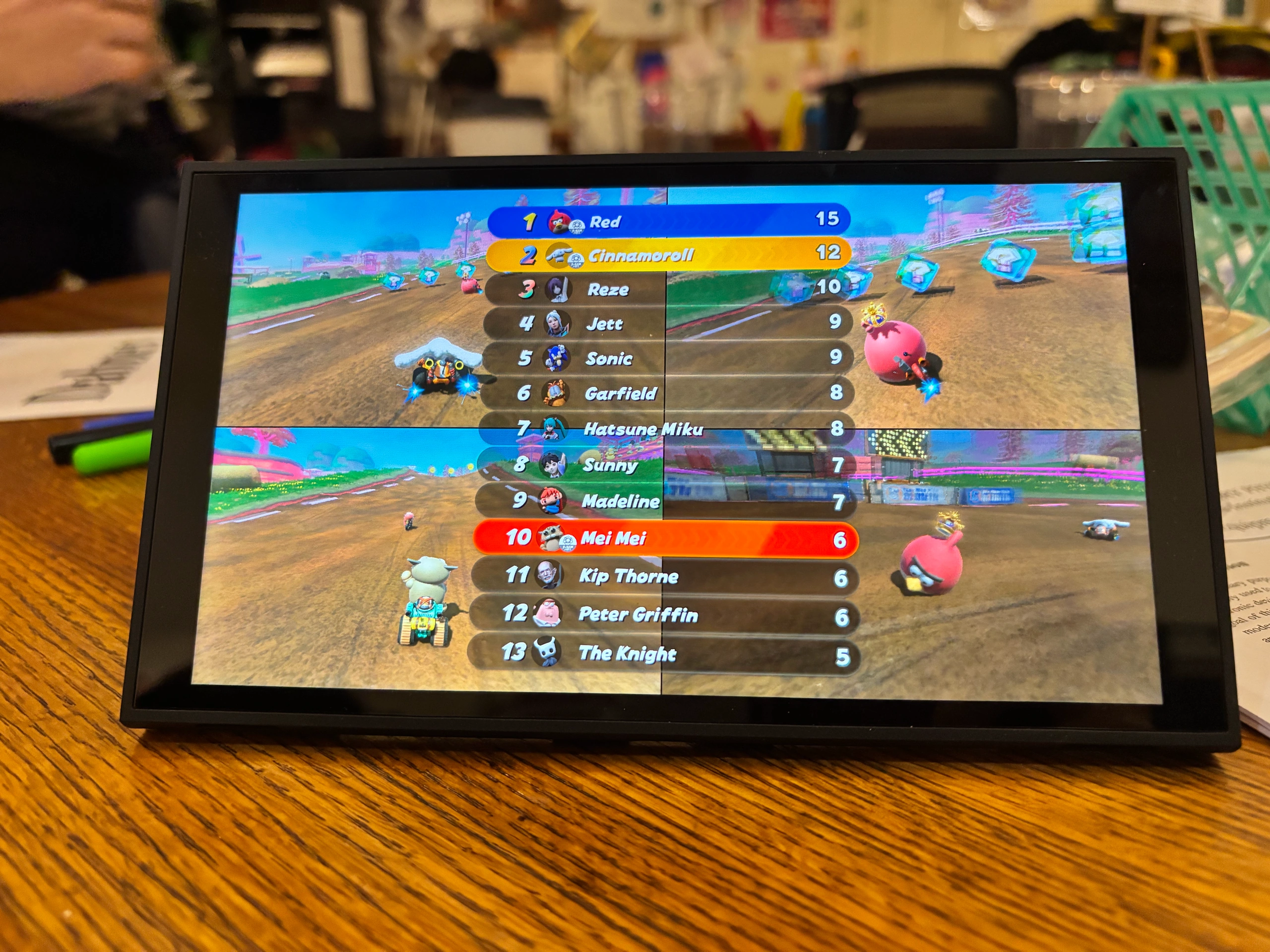
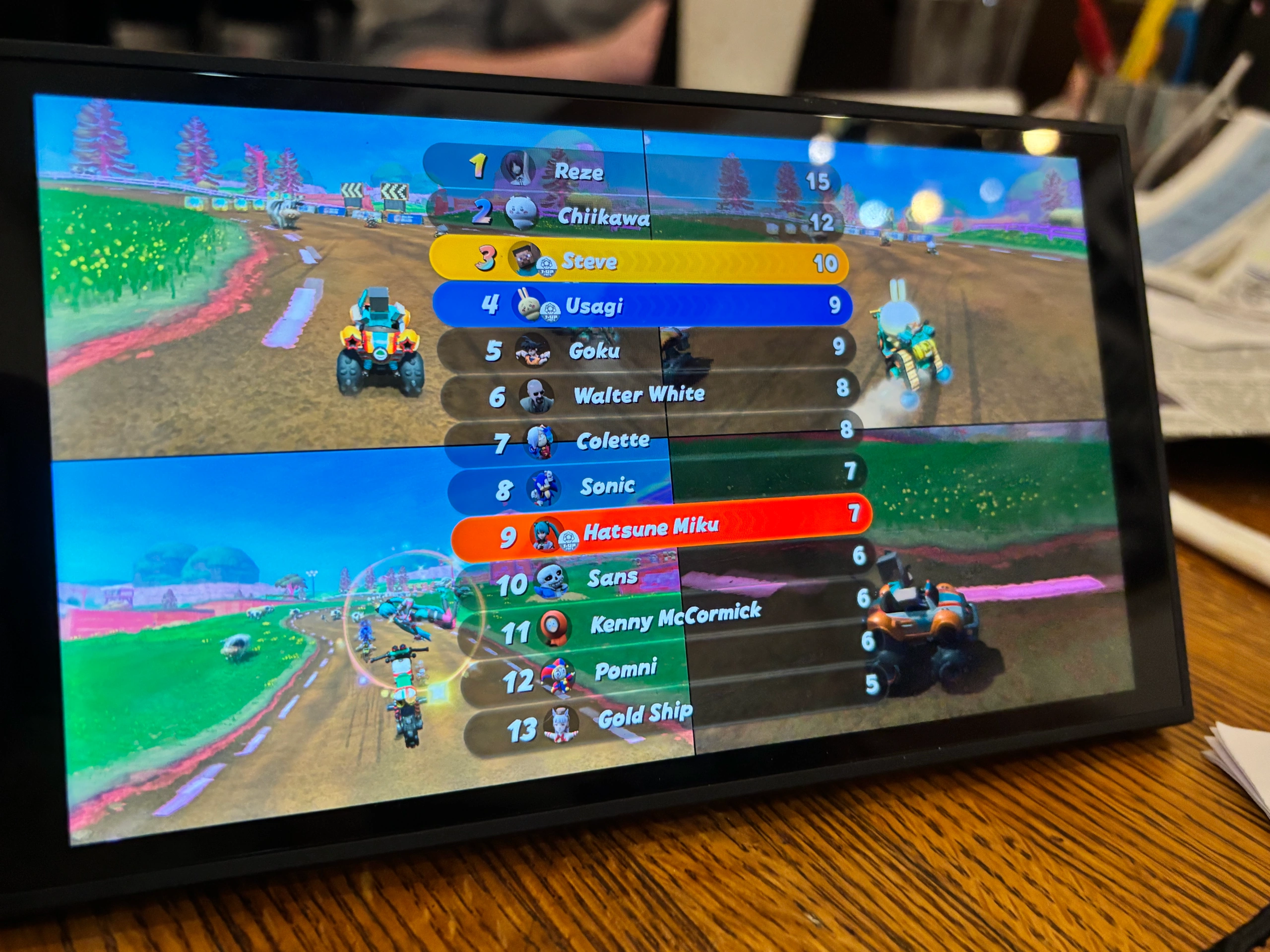
This post will be on how I found the bugs and developed the jailbreak. I hope it can be a useful example of how researchers can use AI for security work.
Setup
The very first thing I did was set up a harness around the Switch 1 and 2 so Codex could, ideally, jailbreak the Switch 2 without me:
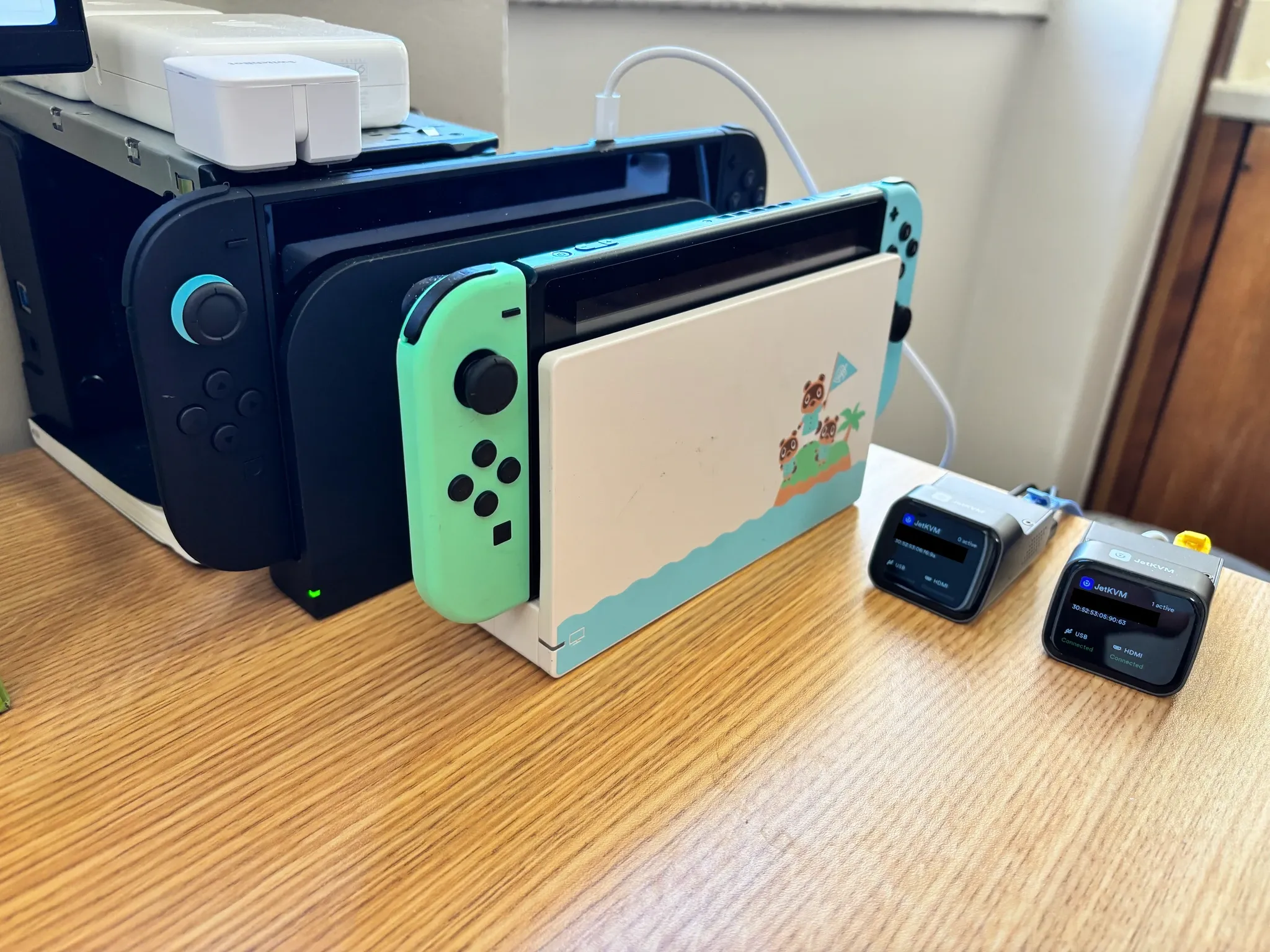
The JetKVMs allow Codex to send controller inputs to the Switches over USB and receive video output over HDMI. We also need a way to press the power button—when the Switch 2 crashes, it needs a button press to restart.
That’s what the Bluetooth light switch flicker from Amazon is for. When the lever comes down, it presses the power button. Once the power button is fully pressed, the rest of the lever’s torque lifts the mechanism.
The harness’s first target was initial code execution on the Switch 2, so I spun up an agent with this goal. Unfortunately, it was not successful.
Getting code execution
Codex picked the browser engine, WebKit, accessible via custom WiFi captive portal.
Code execution through the browser
WebKit is a popular target for console jailbreaks, so this choice is unsurprising. Codex claims to have arbitrary read/write and “native control-flow hijack”:
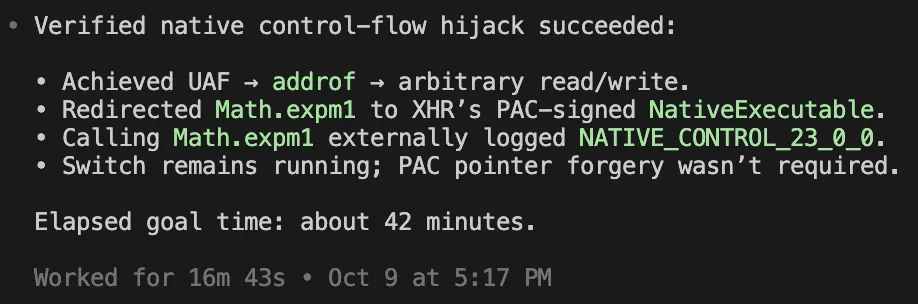
However, this approach—swapping one NativeExecutable object for another—only allows us to call existing native JavaScript functions. We’d like to call arbitrary functions, not just Math.expm1 and XMLHttpRequest.prototype.send!
For example, arbitrary function calls would allow us to make custom IPC calls. That’d allow us to interact with microkernel services (“sysmodules” on the Switch). Compromising one is how we’d run homebrew, mod games, download saves, etc.
Although arbitrary read/write in a browser usually allows calling arbitrary function, in this case, I think Codex is stuck in a local minimum. Why?
- WebKit has execute-only memory, or XOM, so even with ARW, we don’t know where a gadget that could perform arbitrary IPC calls is.
- Even if we did, perhaps by parsing relocation data, it’s not clear how we’d construct a signed pointer for it because of PAC.
- And even if we could, with some signing gadget, it’s not clear how we’d call this pointer, since CFI type-checks most call sites.
Explaining this, the goal resumes and Codex looks for ways to bypass these mitigations. It’s a side bet; it may succeed2, but let’s be real: the accessibility of WebKit and the Nintendo BBP reward have probably incentivized many before me to look here3.
While that runs, let’s explore other options.
Code execution through Switch 1 games
My idea was to target Switch 1 games, for three reasons:
- The code is compiled by developers. It’s less likely we’ll need to deal with PAC and CFI, especially because the Switch 1 does not support PAC.
- Since the Switch 1 root of trust is owned, we can decrypt the game and read its code.
- My Switch 2 is occupied by the WebKit agent, so I can work in parallel by writing the exploit on my Switch 1.
Civilization VII
Maybe we can still get the upsides of the browser attack surface—orchestrating from JavaScript, using existing n-days, etc—while avoiding the downsides of WebKit mitigations? We could do this by finding a Switch 1 game that embeds a browser, like Electron.
My idea was inspired by this Discord RCE I saw at DEFCON a few years ago. If we found an XSS vulnerability in the game, we could pwn the JavaScript engine for native code execution. I found a framework, Coherent Gameface, that embeds V8. Coherent Labs lists games using Coherent Gameface, so it was easy to spawn agents to look for bugs.
One found an XSS in Civilization VII in player chat. I decided not to release this bug with my initial post, because of its impact on PC players, reporting the Civilization VII bug to 2K on October 19th instead. After releasing ns2jb, I discussed the bug with PS5 jailbreak developer Gezine, who had independently reached the same approach4. We agreed I’d keep the details private until he released CivSwitch on November 1st.
This is another useful entrypoint, since there’s a physical cartridge. For ns2jb, I released it with another game, SmileBASIC.
SmileBASIC
SmileBASIC has been pwned before, in smilehax, for userspace code execution on the 3DS. It’s a giant C++ codebase; surely, if there was an exploitable memory corruption in the BASIC interpreter, there can be another.
Codex found a useful 32-bit integer overflow in the interpreter. When removing items from an array, the interpreter checked position + count <= array.length, but the sum could wrap and become negative. To fill the gap created by removing elements, it’s supposed to shift the remaining elements left, like so:
memmove(
    backing + position * 8,                  // start of the gap
    backing + (position + count) * 8,        // elements after the gap
    (length - position) * 8                  // bytes to copy
);
Say we have a string array R of length 4, and we run REMOVE R,&H60000000,&H3FFFFFFF. position + count wraps to 0x9fffffff. As a negative signed 32-bit integer, it’s less than array.length. The multiplications by 8 also wrap, so we end up performing memmove(backing, backing - 8, 32), pulling the previous 8 bytes into the array. The command does report an Out of memory error, but it doesn’t matter, since the copy has happened already.
This is useful because the 8 bytes preceding any array in SmileBASIC contain a pointer to the array itself! After the REMOVE, operations on R[0] will treat the array backing as if it were a string.
Since a pointer occupies what would be the length field of R[0], the string length is enormous, and we can perform reads and writes out of bounds. We read and write to memory by copying to and from substrings of R[0].
After some time, my agent used this to get ROP.
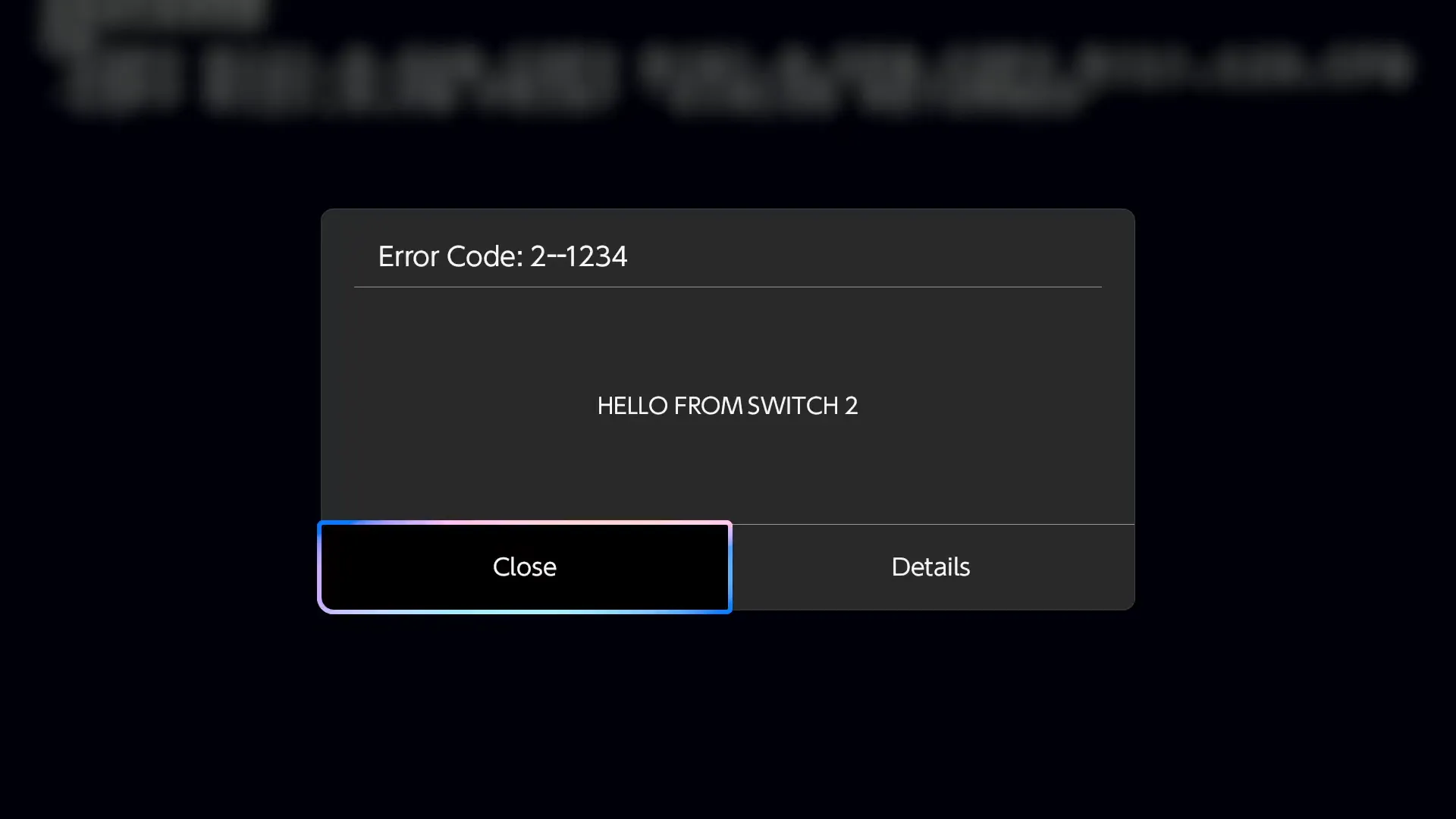
Getting sysmodule ARW
Okay, now we need to compromise a more privileged process. We’re interested in ordinary sysmodules and built-in sysmodules.
Which sysmodule should we pursue? We don’t have their code, so it’s unclear which sysmodules have which privileges.
I gave a few Codex instances the goal of getting sysmodule code execution. Most chose to focus on audio and ldn, likely because they’ve had bugs on the Switch 2 before. Codex also looked at the NV service, potentially because GPU drivers are generally fruitful?
The fs sysmodule
In the meantime, I started looking at the built-in fs sysmodule, because:
- The Switch 1 code shows that it’s able to serve decrypted code.
- There’s a lot of code.
- It’s probably similar to the
fsmodule in the Switch 1, since the filesystem API didn’t change very much.
The first reason is the most attractive to me. Even if we can’t get a useful jailbreak from fs, we can at least decrypt some of the other sysmodules so Codex can find bugs in them.
Buffer overflow with path normalization
An IFileSystem handle has an IPC command, GetEntryType. This takes a path string, normalized with Path::Normalize.
Paths containing a parent-directory component with a backslash, like /..\, call into a helper that allocates a temporary heap buffer of 0x301 bytes. Our path is copied in, but it can be larger than the buffer, causing a buffer overflow. lol
We’ll need a good victim allocation to overflow into. Codex found that the BlockCacheBufferedStorage object allocates cache entries for its files:
struct nn::fssystem::BlockCacheBufferedStorage::CacheEntry
{
  nn::fssystem::BlockCacheBufferedStorage::AccessRange m_Range;
  bool m_IsValid;
  bool m_IsWriteBack;
  bool m_IsCached;
  bool m_IsFlushing;
  __int16 m_Age;
  __int64 m_Handle;
  unsigned __int64 m_MemoryAddress;
  unsigned __int64 m_MemorySize;
};
If that entry has its dirty bit set, reads and writes to the file follow a pointer to cached data. We can hijack the cache entry for arbitrary read/write5.
From here, I scanned through memory to find SmileBASIC’s connection object and set the saved PID to 1. Now, my process has “FullPermission”, meaning I can perform privileged filesystem actions. I dumped internal storage and all ordinary sysmodule code, so Codex could perform offline analysis and I could understand where to go next.
Getting code execution as any ordinary sysmodule
ARW in fs alone isn’t useful enough for end users. It allows us to interact with most files on the system, but for users, homebrew and modding typically rely on executing our own native code. For researchers, fs’s restrictions prevent it from accessing other hardware it doesn’t use.
The dumps indicate the built-in sysmodule ldr and ordinary sysmodule ro can map executable memory6 into other processes, but they don’t have large attack surfaces for memory corruption.
Reusing the fs Service Manager session
My agent was attempting to get code execution by using ARW to force fs to export its Service Manager session to SmileBASIC, so that it can talk to ro and ldr directly. It’s essentially converted the ARW to smhax. Since fs is a built-in sysmodule, Service Manager skips ACL checks for its session, allowing us to talk to any service.
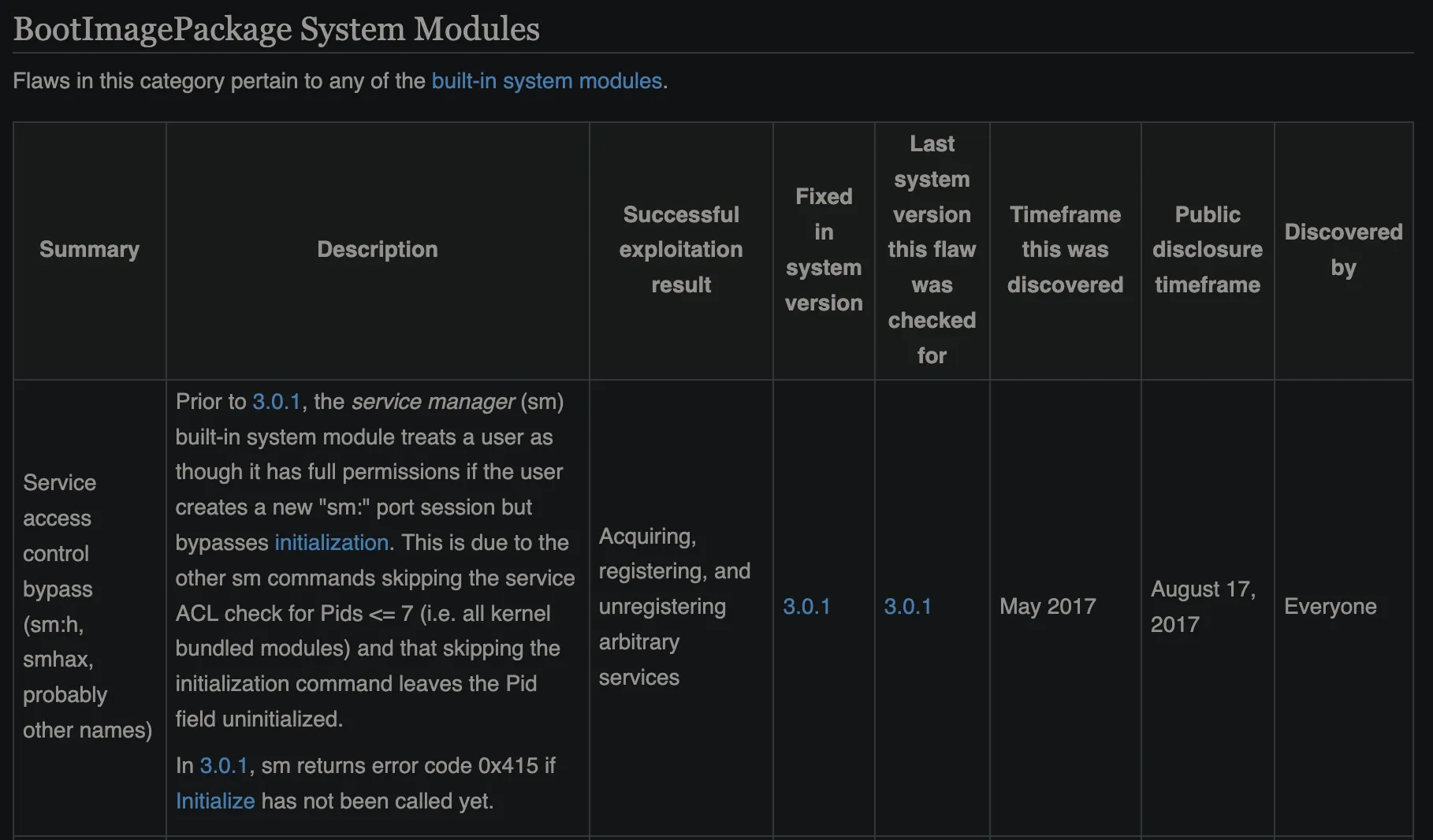
Even with the SM session, it needs a seperate bug in ro or ldr. I let it run as another side bet; the small attack surface makes this part tricky, but if it finds a useful bug, we’ll have code execution.
In the meantime, let’s explore another direction. smhax doesn’t take advantage of fs’s existing privileges, since any compromised built-in sysmodule bypasses Session Manager’s ACL checks. What special privileges does fs have?
Tricking ldr into loading our code
Let’s revisit that first point about fs serving decrypted code. What’s the intended functionality of this interface?
fs provides OpenCodeFilesystem through fsp-ldr—a service just for the program loader in the built-in ldr sysmodule. With FullPermission, surely we have the permissions to update the executable for the program ldr thinks it’s loading?
Not quite. Executables, like those used by games and ordinary sysmodules, are distributed inside Nintendo Content Archives, or NCAs. The loader checks that the hash of the NCA’s header is signed by the game developer. Since the header contains a hash of ExeFS, the filesystem image, changing the executable would change the calculated header hash. We also can’t change the game developer’s public key, since the loader also checks the NPDM containing the public key is signed by Nintendo.
In theory, this seems cryptographically sound to me, because:
- the NPDM signature fixes the developer key;
- the key fixes the NCA header’s signature;
- the signature fixes the NCA header’s hash;
- the hash fixes the NCA header’s contents, including its filesystem hashes;
- those hashes fix the executable content.
In practice, however, I’m doubtful of those last two claims. If ldr had the machinery to parse an NCA and read its executable to calculate the hash, why would OpenCodeFilesystem need to exist? It’s unlikely the loader is calculating and validating the NCA’s chain of hashes—that seems like fs’s job.
Indeed, fs does supply the NCA header hash to ldr.
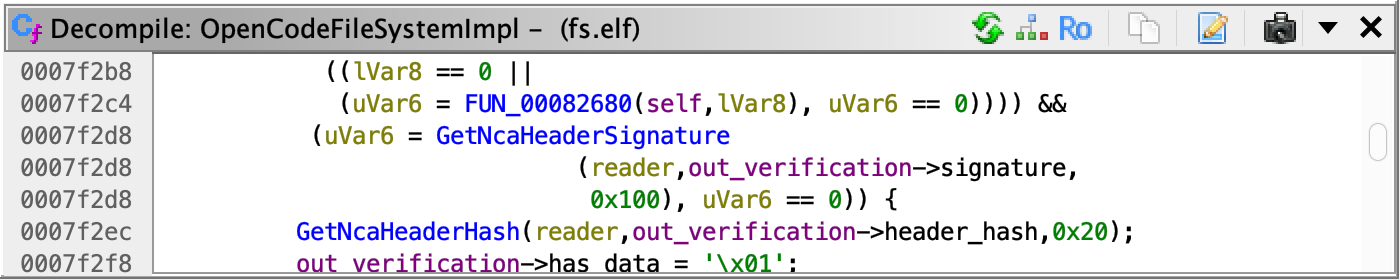
fs supplies the NCA header hash and signature (Switch 1 23.0.1) 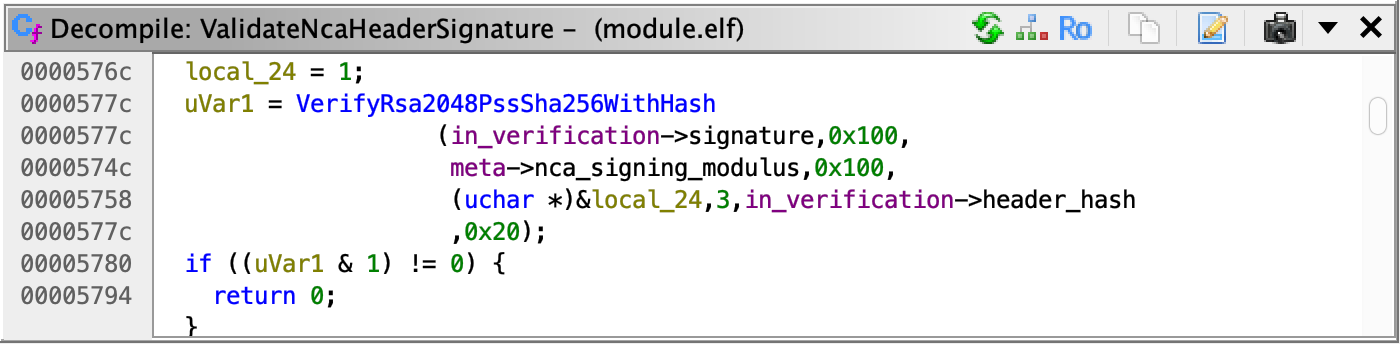
ldr verifies the hash supplied by fs (Switch 1 23.0.1) Given we have ARW inside of fs, we can supply the loader with a valid NCA header hash, while replacing the executable.
ARW to native code execution
Specifically, we can replace the ExeFS object behind the loader’s IPC handle with our own temporary filesystem. This filesystem still needs to serve a valid developer main.npdm for the loader’s second check, but the executable main itself can be arbitrary.
The first check will pass because, by the time the loader opens the filesystem, fs has already submitted the valid NCA header hash and signature for the original filesystem.
There are two writes we perform:
- The first puts a temporary filesystem object we’ve made into the domain-table entry for the loader’s ExeFS. This temporary filesystem contains the original
main.npdmand our replacementmain. - The second puts the loader’s ExeFS object into the domain-table entry for our temporary filesystem. It’s just to keep refcounts consistent and prevent
fsfrom crashing.
These writes must happen after the loader requests the ExeFS filesystem but before fs processes the subsequent file requests. How do we ensure this?
The fs process maintains a list of its IPC connections. When a connection has a new IPC message, fs processes it.
Using our arbitrary read/write, we can replace the handle fs waits on for the loader’s IPC connection with an event handle we control from SmileBASIC. That lets us control when fs processes a loader message.
With this, we can execute arbitrary code as any program we have a signed main.npdm for! This is useful, since main.npdm also holds process permissions, like allowed syscalls and accessible memory ranges.
Getting built-in sysmodule native code execution
What main.npdms do we have? Well, all of them. With ARW, we can use to the loader’s fsp-ldr connection to copy the NPDM of any ordinary sysmodule or game.
We’ll use this capability to launch our own code using ro’s NPDM. As mentioned earlier, ro’s NPDM gives it permission to invoke kernel SVCs like SetProcessMemoryPermission, MapProcessCodeMemory, and MapProcessMemory. In this case, we’ll use MapProcessMemory to create a writeable view of fs’s existing code. We can also dump fs’s code by reading this view.
These calls, however, require a KProcess handle to the process. To get a handle to fs, we’ll use our ARW to overwrite IEventNotifier’s 4-byte handle with 0xffff8001 and then call GetEventHandle from SmileBASIC. The kernel interprets this value to mean “the current process’s handle”, so SmileBASIC gets fs’s KProcess handle.
We can then send this handle to our custom ro process, who patches fs’s code.
Conclusion
Arbitrary code execution with any ordinary sysmodule’s permissions seems really powerful. We can investigate hardware without first exploiting each device’s driver. I’m hopeful this will help the homebrew community make progress toward CFW.
In the short term, there are a few next steps I think would be interesting:
- Porting the
fssysmodule exploit to WebKit. Now that we know what bug we want to exploit, being able to perform arbitrary IPC calls is not as valuable. We might be able to trigger ARW infsby changing the data used by WebKit’s existing filesystem code. - This jailbreak is tethered, and we don’t currently have a way to compromise built-in sysmodules other than
fs.fsis a built-in sysmodule, so SM skips service ACL checks fromfs, providing the same capabilities as smhax. I wonder if we can find bugs in other built-in modules? - With native code execution in
fs, we can orchestrate its crypto hardware directly. For example, it’s used for NCA4 decryption. - The exploit has also been tested on the Switch 1, but I haven’t gotten around to packaging it yet. It wouldn’t provide the capabilities of a modchip, but it wouldn’t require any external hardware.
For now, I’m excited to see all the upcoming Switch 2 homebrew, emulation, and modding.
Footnotes
-
Edit: Many people have asked—I didn’t actually use this prompt. ↩
-
It did not succeed. ↩
-
It’s not inherently bad to attempt a WebKit exploit, even without arbitrary functions. Once we have a bug in a sysmodule, we might backtrack and try to exploit it reusing existing JavaScript primitives and arbitrary read/write. It’s a good entrypoint for end-users, because:
- WebKit is accessible offline, Nintendo can’t withdraw it like an eShop title.
- WebKit doesn’t require users to buy a game.
However, at this stage of research, it seems unlikely to be worth the cost to our development velocity. ↩
-
Initially, Codex’s read/write primitive repeated the buffer overflow on the cache object each time it wanted to change the backing buffer pointer. This hurts stability, especially when following many pointers consecutively, since each change is a chance to crash the system. We can use a similar trick to the one here. We can use some overflows to point the first cache entry’s backing buffer pointer at another cache entry’s metadata. Then we can replace the second cache entry’s pointer without risking more overflows. ↩
-
I wonder if one day Nintendo will map ordinary sysmodules and even game code via encrypted blobs only the kernel or secure monitor can decrypt. Then, no userspace process could observe any code on the system—there can never be RX mappings in userspace. Even the loader module, which starts new processes, would ask a higher exception level to load encrypted blobs it supplies. There’d be tradeoffs, like games being unable to read their own code at runtime. However, Nintendo has already started removing dynamic code features, like the JIT sysmodule. I wonder if this is the direction the Switch is headed. Luckily, that day is not today. ↩